On the Disappearance of Images and Their Return Through the Out-of-Focus Image
by Bernd Hüppauf
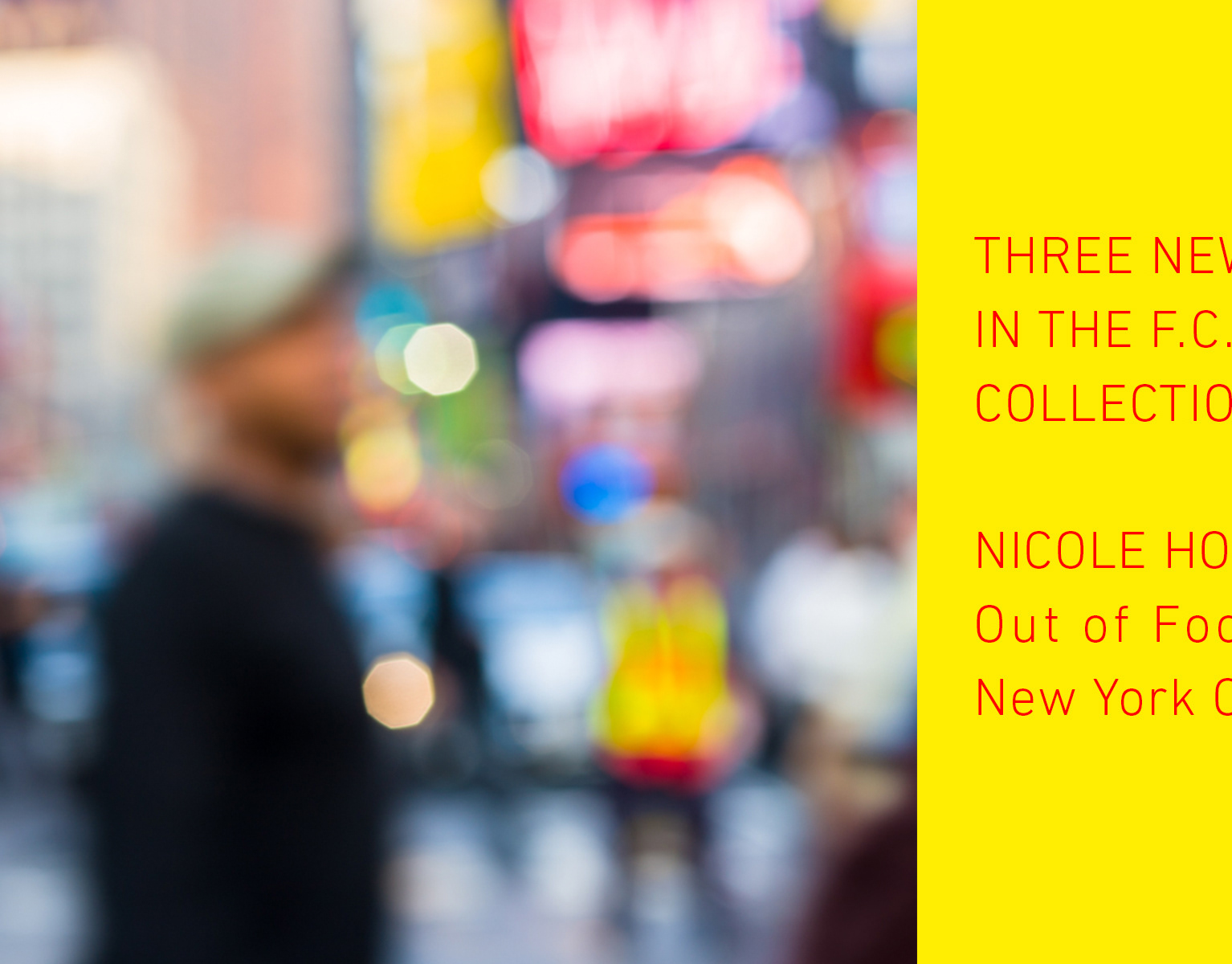
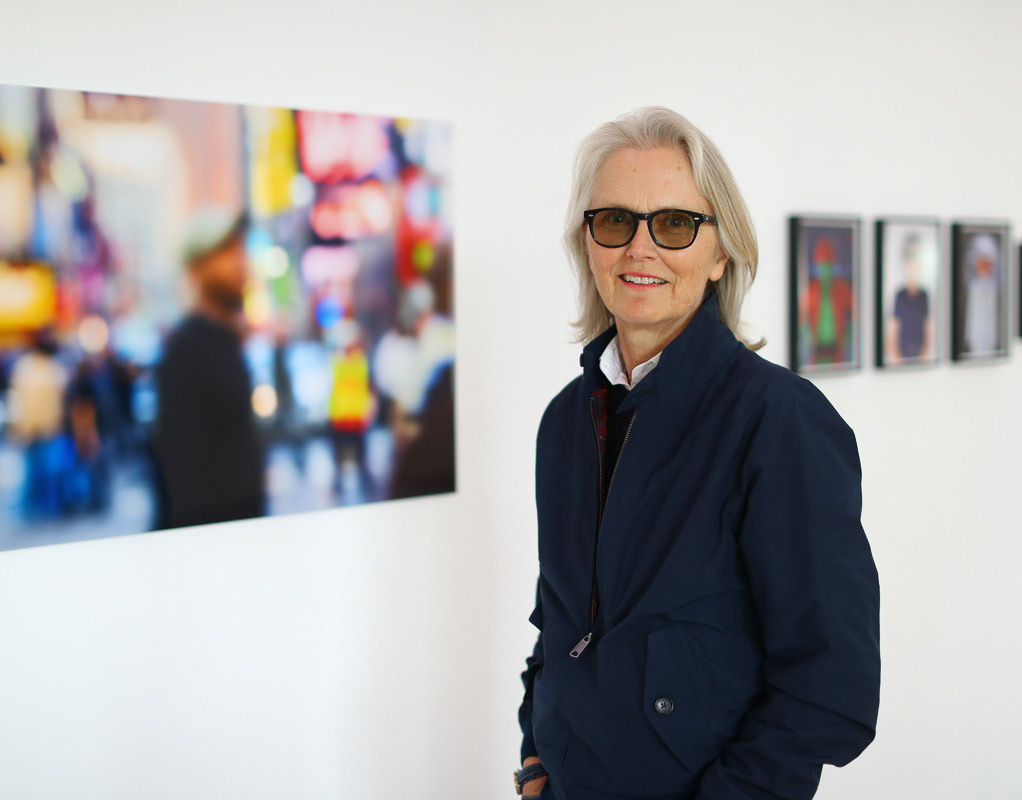
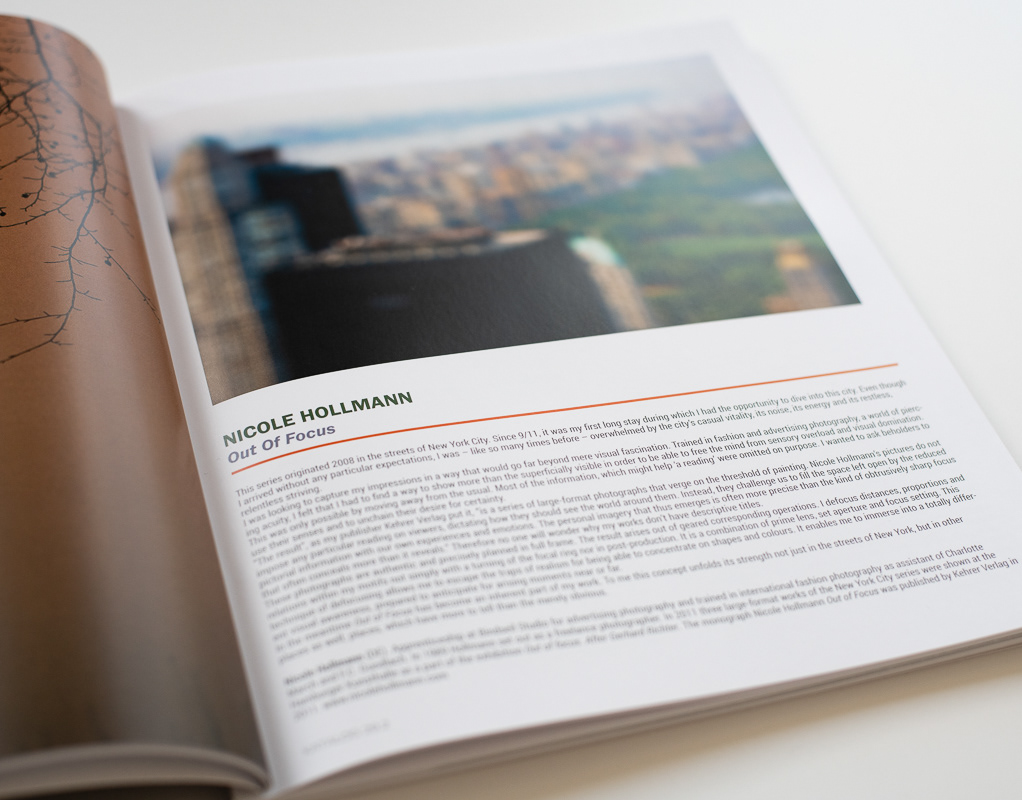
Written on the occasion of the publication of Nicole Hollmann’s monograph Out of Focus, this essay reflects on perception, memory and the role of the out-of-focus image in her photographic work.
Urban Photography Has Given the City Its Form
Most of Nicole Hollmann’s photographs belong to the genre of urban photography and were made in New York. From the earliest days of photography, the relationship between the medium and the city was a close one, and it worked both ways. Early photography developed a love affair with the city, and the city willingly surrendered itself to photography, allowing itself to be revealed and idealised. Photography returned the favour. It endowed the city with a sensitive form, gave it contours, and secured its place within the collective visual memory.
New York, too, is known to us through photographs made by a responsive camera. Jacob Riis’s How the Other Half Lives became an early and celebrated example of urban photography, while the Pictorialism of Alfred Stieglitz and photographers such as Alvin Langdon Coburn, Gertrude Käsebier and Karl Struss contributed to shaping the city’s image in their own ways. Following the invention of halftone printing, photojournalism emerged, producing images that offered an empathetic vision of urban life.
Few cities have achieved such a strong presence within a global visual memory through photography as New York. These images both document and construct; they reveal a truth about the city that extends beyond the merely visible. We feel familiar with New York even if we have never been there. Those who visit it for the first time experience a sense of recognition, finding confirmed what their visual memory had stored long before they ever set foot in the city.
Nicole Hollmann’s photographs belong to this long tradition of empathetic New York photography, yet at the same time they depart from it. They reverse the relationship between familiarity and estrangement. They create emotional involvement, yet their lack of focus distorts and undermines familiar images. Visitors to New York may experience a sense of recognition, but they do not recognise the city itself. The city disappears into indistinctness, hovering on the threshold of abstraction.
Out-of-focus images invite viewers to unlearn their acquired habits of seeing. They do not help memory recall clear and unambiguous images; instead, they encourage us to learn anew. Viewers must engage with the questions that arise on the surface of the image and resist the urge to search behind its indistinctness for the familiar picture they long to recognise once more.
The City and Modernity
The spontaneous love affair between photography and the city gradually evolved during the twentieth century into a marriage of convenience. Photography, the primary medium of modernity, participated in the production of the city as the quintessential site of the modern age. It helped shape the city and then admired the image it had created. The new media conceived the city as the representation of modernity in the broadest sense.
Theories of photography leave little doubt: the city became the domain of a cool and rational modernity, while photography emerged as its defining medium. Walter Benjamin’s now canonical essay The Work of Art in the Age of Mechanical Reproduction, drawing on Béla Balázs, Bertolt Brecht and Sergei Eisenstein, brought together the central characteristics of photography as a modern medium. His theory of representation emphasised the cognitive power of photographic and cinematic images.
Photography revealed modernity both on and behind the façades of the city. Fritz Lang’s Metropolis gave a name to this alliance of photography and construction. Experimental and realist photographers alike—not only in Germany and the Soviet Union, but also in the United States—contributed to this visualisation of the modern city.
The defining element of this new society and its urban visual culture was time. Photography, both as a practice and as a theory of images, became deeply intertwined with the temporal order produced by rationalisation. Vision, photographic techniques and photographic images themselves were drawn into a process that urbanisation transformed into the lived reality of modern life—a process that demanded ever greater speed.
The writings of Georg Simmel, Siegfried Kracauer and Walter Benjamin all emphasised the relationship between time—speed, acceleration, suddenness—and the modern metropolis. In photography and film, Benjamin recognised the media of velocity, distraction, montage and construction.
The eye became the most important sensory organ in this transformation of human beings and their environment, while the camera became its agent. The fractions of a second required to make a snapshot became the measure of visual perception—not merely in a descriptive sense, but in a prescriptive one. Precision within a split second became the ideal.
Reflecting on perception in the era following the First World War, Ernst Jünger wrote that the human eye itself was becoming a photographic lens.
The Dissolution of Representation Through the Out-of-Focus Image
Over the course of the twentieth century, this vast project entered into crisis. Along with it came a crisis of representation, of reality, of documentation and, ultimately, of the city itself. The acceleration and gigantism of the age reached their limits. Further intensification threatened to destabilise the entire system.
In response to highly efficient systems of information processing and increasingly abstract, opaque technologies of production, a new attitude towards reality has emerged. The out-of-focus image is one of its symptoms.
It rehabilitates the obscure and the opaque. It becomes a means of reclaiming a sensually experienced world, translating the immaterial abstractions of the technological age back into lived experience and restoring a bodily sense of reality. In this respect it attempts what Gottfried Benn longed for in his poem Icarus:
“Disburden my eye of thought.”
Within the alliance of rationalisation and image, acceleration and representation, there was not only the triumph of modernity but also a profound loss, visible in the growing estrangement between the city and its images. The urban image created through the out-of-focus photograph differs fundamentally from the city image produced by the photography and cinema of rationalisation and acceleration because it adapts itself to the vagueness of memory.
The out-of-focus image slows down the gaze and thereby strikes at the very core of both city and photography. It no longer seeks the essence of the modern city. It no longer attempts to reveal what makes the city modern. Instead, it disengages itself from the logic of rationalisation.
It presents the world at the threshold of disappearance, at the moment when it threatens to dissolve into diffuse and elusive suggestions—a vulnerability it shares with memory itself.
The out-of-focus image begins with the speed of photography and teaches a different way of seeing. It refuses to accept the acceleration of social processes as inevitable. Against the ideals of speed, precision and control, it sets a visual scepticism.
The out-of-focus image is retardant. It postpones judgement and preserves a state of suspension within the gaze. It may be understood as scepticism translated into visual form, dissolving into mist what once appeared certain and self-evident, requiring neither imagination nor doubt.
The out-of-focus image is akin to the daydream. This affinity marks its difference from the photographic and cinematic image analysed by Walter Benjamin and the theorists of photography and film during the 1920s.
Unlike the programme of the New Vision, contemporary out-of-focus photography does not rely on visual shock or overt aesthetic provocation. It avoids dramatic effects and instead employs a gentler strategy.
It liberates vision from the imperative of cognition and from the demand for scientifically unambiguous images. It dissolves contours and leads us beyond the eye, restoring space to the other senses. It invites us to listen and to feel. It activates the imagination, enabling viewers to reconnect fragmented perspectives and isolated moments as though through the haze of a daydream.
The fragmentation created by the brief instant of exposure and by the disconnected juxtaposition of photographs is counteracted through the drifting gaze encouraged by out-of-focus images. Such images lead away from distraction. They require a different mode of attention, encourage contemplation and evoke empathy.
The slowness of the out-of-focus image should not be mistaken for an escape from speed, nor does it follow an anti-modern programme. It is not an act of refusal. Rather, it draws the consequences from the failure of rational representation to translate reality and its accelerating tempo into images.
The out-of-focus image does not create a veil behind which one might retreat into a slower past. Instead, it constitutes a mode of imagery that contributes to liberation from the tyranny of time and fixed identity. It enables us to escape the fetishism of rationalisation and finality, to experience the slower temporality of intuition and possibility, and to discover a space freed from economic and political occupation.
To the extent that urban photography once gave the city the form of modernity, out-of-focus photography is engaged in dissolving that form.
Nicole Hollmann’s photographs participate in this process of dissolution. The New York revealed in her images is unfamiliar. It is neither the city of modernist speed nor that of critical social analysis. Her photographs point towards a renewed relationship with the endangered image. They refuse simple recognition, yet they do not retreat into abstraction. Instead, they hand reality over to personal experience, to the fluidity of memory and to the instability of imagination.
This city is permeated by the subjectivity of the viewer. It is composed of a shifting mixture of the familiar and the dreamt, the real and the possible. Viewers must relinquish the habitual goal of recognition, allow themselves to become disoriented, and recalibrate their vision in order to do justice to the out-of-focus image, to discover what remains unknown within it, and to experience its possibilities.
Before these images—and with them—one can spend time.
The wandering of the imagination through their haze of forms and colours requires, and rewards, more time than the concentrated viewing of a sharply focused image. Within this luxury of apparent wastefulness, the self may rediscover itself without submitting to the demands of efficiency or identity.
Just as the lovers and flâneurs of the nineteenth century found neither place nor time within the efficient and rationally organised space of the modern city, the out-of-focus image opens a space for new forms of wandering and emotional experience.
The vast amounts of time that modern technologies allow us to save could scarcely be spent more meaningfully than in front of out-of-focus images.
Bernd Hüppauf
Bernd Hüppauf (*1942) is a cultural historian and literary scholar. He taught at universities in Germany, Australia and the United States, including many years at New York University. His research and publications focus on modern cultural history, literary and cultural anthropology, image theory and photography. Since his retirement, he lives in Berlin.